

Carrying out import and export procedures can cause businesses considerable difficulties, especially when they have to handle numerous documentation and regulatory requirements. Even a minor mistake can delay customs clearance or incur additional costs. Using professional customs services helps businesses reduce their workload, minimize errors, and take a more proactive approach to the customs clearance process. Explore more with PTN Logistics.
What tasks do customs services support businesses with?
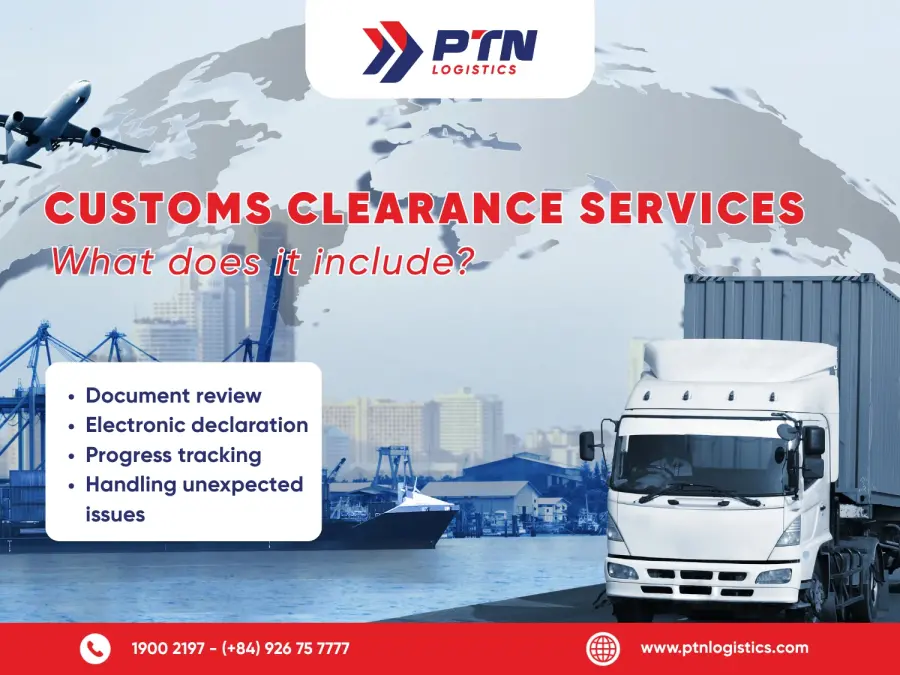
Customs services support businesses with everything from document checks and declarations to monitoring and handling issues that arise during the customs clearance process.
Checking documents and cargo information
Before submitting a customs declaration, PTN Logistics reviews information such as the goods description, quantity, value, delivery terms, expected HS code, origin, and transport documents.
Early cross-checking helps identify discrepancies between the invoice, packing list, bill of lading, and actual shipment so that additions or adjustments can be made promptly.
Supporting customs declarations
Once the documents are complete, PTN supports the preparation and electronic submission of customs declarations.
Information on the customs procedure type, HS code, customs value, origin, and tax rates is checked before registration. This helps minimize errors that may affect tax obligations and customs clearance schedules.
Monitoring the procedure processing
After the declaration is registered, PTN monitors responses from the system and customs authorities, including channel assignment, document inspection, physical inspection, or requests for additional documents.
This enables businesses to be more proactive in their delivery and collection plans and coordinate with warehouses, ports, and carriers.
Coordinating the handling of arising issues
If a shipment requires explanations, additional documents, declaration amendments, or specialized inspections, PTN will coordinate with the business to identify the issues that need to be addressed and prepare documents as required by the competent authorities.
What should businesses prepare before carrying out customs procedures?
Preparing in advance helps businesses understand their shipment requirements, complete documentation, and minimize issues during customs clearance.
Checking policies applicable to the goods
Before making a customs declaration, businesses need to check the management requirements applicable to their goods, including:
- Import and export policies: Determine whether the goods are prohibited, restricted, or subject to licensing or quota management.
- Cargo information: Review the goods description, functions, composition, new or used condition, and country of origin.
- Specialized inspection requirements: Check whether the goods are subject to quarantine, quality inspection, food safety inspection, or other specialized management requirements.
- Required documents: Identify in advance the permits, certificates, or relevant documents needed so they can be prepared before carrying out the procedures.
Checking HS codes and tax obligations
Before submitting a customs declaration, businesses need to compare the product description, structure, functions, and technical documents against Vietnam’s Nomenclature of Export and Import Goods.
As a professional customs service provider, PTN can support the review of HS codes, import and export duties, VAT, and the possibility of applying special preferential tax rates when rules of origin are satisfied, as well as C/O.
Preparing permits and specialized documents if required
Goods need to be checked to determine whether they are subject to quarantine, quality inspection, food safety inspection, conformity assessment, or specialized management requirements.
If so, businesses must prepare the correct permits and documents and register with the competent authorities. The information on permits or specialized inspection results must be consistent with the customs declaration to minimize requests for additional documents during customs clearance.
Need to check HS codes, product policies, or documents before making a declaration? PTN Logistics can support businesses in reviewing and preparing appropriate documents from the outset.
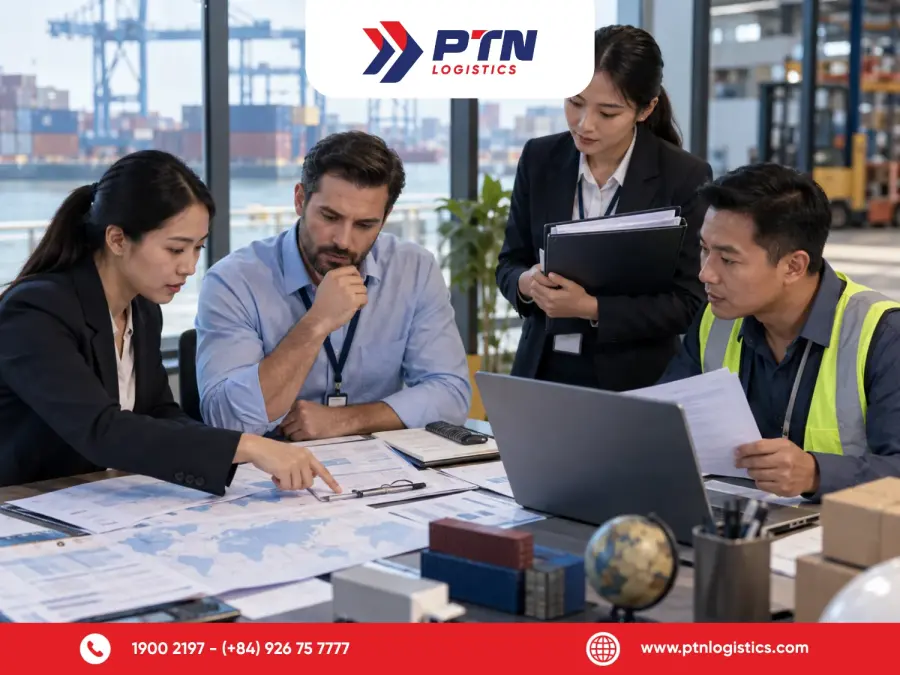
How does the customs clearance process for a shipment work?
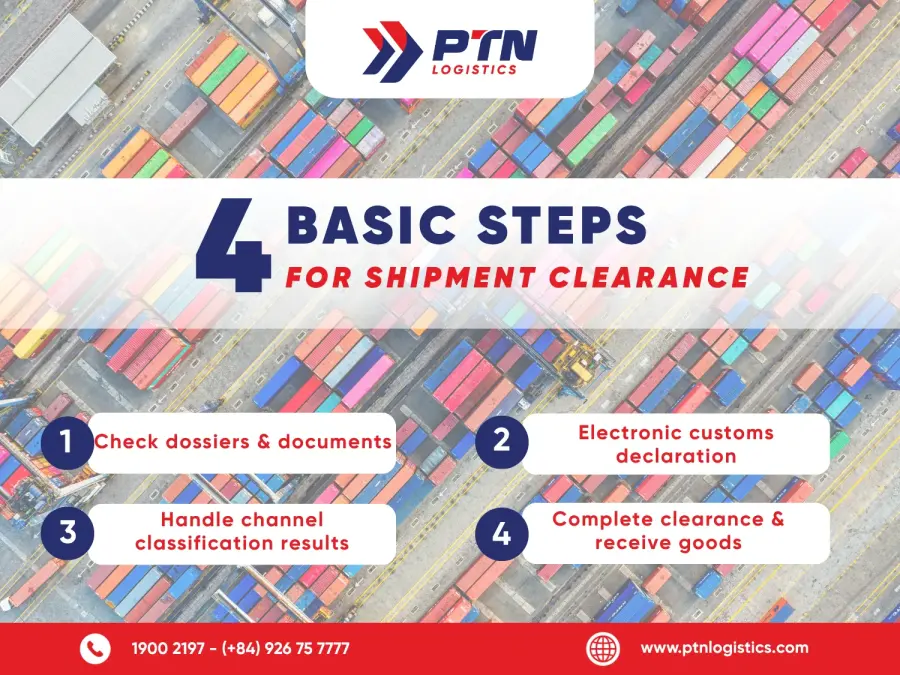
The customs clearance process usually begins with document checks, declaration registration, and the implementation of inspection requirements based on the processing results of the customs authorities.
Document inspection
Before registering a customs declaration, businesses need to check the completeness and consistency of their customs documents, including:
- Information on the contract
- Commercial invoice
- Packing list
- Bill of lading
- Relevant documents depending on each customs procedure type
Carefully reviewing documents from the beginning provides a more accurate basis for the declaration process. It also helps minimize requests for amendments or additional documents later.
Customs declaration
Once the documents are complete, the customs service provider carries out the electronic customs declaration and registers the declaration in the system.
Before submitting the declaration, information such as the customs procedure type, HS code, customs value, taxes, and attached documents must be thoroughly checked. After receiving the declaration, the system determines the inspection level and the subsequent processing steps for the shipment.
Processing according to the customs channel assignment
After the declaration is registered, the customs system assigns an inspection channel based on risk management to determine the level of inspection. For shipments exempt from detailed document or physical cargo inspections, procedures may be processed under the applicable conditions.
In cases requiring document inspection or physical inspection, the relevant documents must be presented, the opening of cargo must be coordinated, or other operational requirements must be fulfilled.
Completing customs clearance
A shipment is cleared once all inspection requirements, tax obligations, and relevant specialized procedures, if any, have been completed.
After the declaration meets the conditions for customs clearance, PTN Logistics will continue coordinating with customs authorities, ports, warehouses, and carriers to complete supervision procedures, collect the goods, or hand them over according to the agreed transportation plan.
What issues can affect customs clearance schedules?
Customs clearance timelines can be affected by various factors. Therefore, using PTN’s professional customs services helps businesses expedite procedures and minimize potential complications.
Incomplete documents or inconsistent information
Missing documents or inconsistent data between the invoice, packing list, bill of lading, and customs declaration can delay the customs clearance process.
In addition, discrepancies in the goods description, quantity, value, HS code, or origin may lead to requests for inspection, explanations, or supplementary declarations.
Goods subject to specialized inspection
Goods subject to specialized inspection may experience longer customs clearance times due to procedures such as registration, sampling, inspection, and waiting for results.
Depending on the type of goods, requirements may include quarantine, quality inspection, food safety inspection, or other specialized procedures.
Requests for additional documents
During declaration processing, customs authorities may request additional documents or clarification when they identify discrepancies between the documents, declarations, and actual goods.
PTN monitors system responses, identifies the information that needs to be supplemented, and coordinates with businesses to prepare supporting documents and explanations. If a supplementary declaration is required, it must be submitted in accordance with the applicable timing and current regulations.
When should businesses use customs services?
Businesses should consider using customs declaration services when they need operational support, document control, or coordination across multiple stages of the customs clearance process. Common situations include:
- Importing or exporting a product for the first time: The business is not familiar with HS codes, tax rates, product policies, permits, or specialized inspection requirements.
- Goods with specific characteristics or complex documentation: Shipments containing multiple product types, detailed technical specifications, or documents from multiple parties need to be reviewed before declaration registration.
- Frequent shipments: The business needs to monitor customs declarations, channel assignments, document inspections, physical inspections, and coordinate with ports, warehouses, or transportation providers.
- Declarations requiring additional processing: Cases requiring explanations, supplementary declarations, information adjustments, or additional specialized documents often need close monitoring and coordination by an experienced service provider.
- Businesses without a dedicated Logistics department: A service provider can support document checks, declarations, progress monitoring, and the handling of arising requirements within the scope of authorization.
What should businesses provide to a customs procedure support provider?
To carry out declarations and customs clearance, businesses need to provide the following key information and documents:
- Commercial Invoice and Packing List
- Bill of lading or booking information
- Detailed cargo information (goods description, functions, materials, model, technical specifications)
- C/O and origin documents if preferential tax treatment applies
- Permits and specialized inspection documents (if the goods are subject to management requirements)
- Delivery and collection information and authorization documents (if any)
If your business needs support with document checks, declarations, or customs procedures for an import or export shipment, contact PTN Logistics for advice on a suitable solution.
The customs clearance process always requires a high level of accuracy in every document and procedure. Therefore, choosing a reputable customs service provider will help save time and costs. With extensive professional experience, we are confident in accompanying businesses throughout the process. Contact PTN Logistics today for support.
Contact Information
- Hotline: 1900 2197 – 0926 75 7777
- Email: nam.nguyen@ptnlogistics.com