

Using import export services is a suitable solution for businesses that do not yet have a dedicated department, helping them optimize costs and resources. Join PTN Logistics as we explore which stages can be outsourced, which tasks businesses still need to handle themselves, and how to choose the right partner.
What tasks do export-import services include?
Unlike ordinary express delivery parcels, commercial shipments must go through multiple stages and require stricter documentation and procedures.
Checking shipment information and requirements
Before proceeding, the legal status of the shipment must be reviewed, including its HS code, applicable product policies, and specialized inspection requirements. Early assessment helps businesses accurately estimate taxes and fees, prepare all necessary permits, and reduce the risk of goods being held at the port due to missing documents or incorrect declarations.
Preparing documentation
The core documents in an international trade documentation set include:
- Commercial invoice: Records detailed information about the shipment’s value, delivery terms, and payment method agreed upon by the buyer and seller.
- Packing list: Specifies the packaging details, net weight, gross weight, and actual number of packages.
- Bill of lading / air waybill: An important document issued by the carrier, confirming cargo ownership and transportation details.
- Certificate of origin (C/O): Identifies the origin of goods, enabling businesses to benefit from preferential tariff treatment under trade agreements.
Handling customs procedures
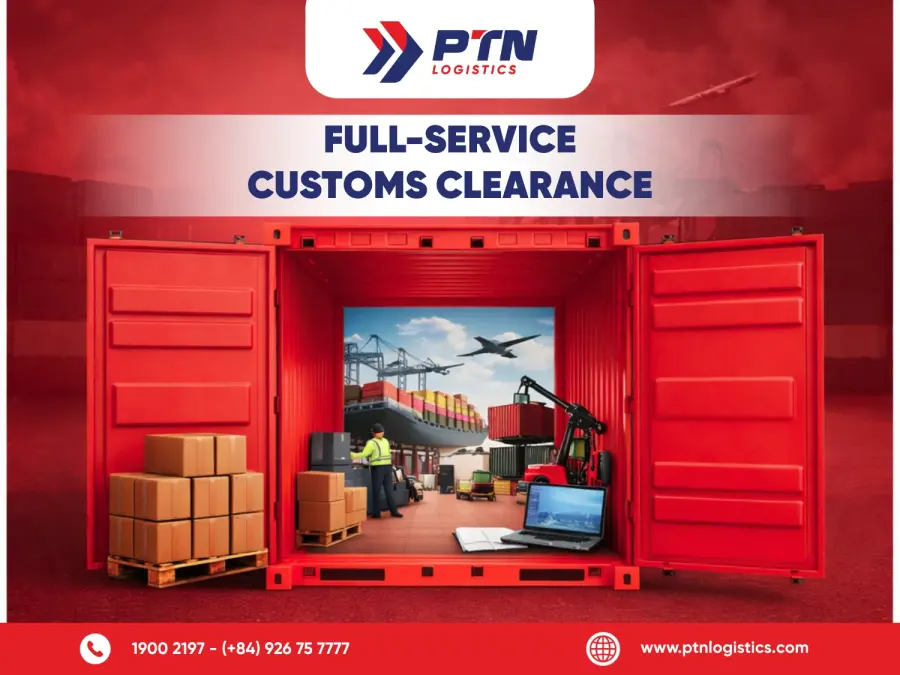
This stage requires experience in processing documents and handling unexpected situations. The customs agent submits declarations through the VNACCS/VCIS system, pays taxes, and provides explanations to customs authorities when questions arise. Entrusting export-import procedures to specialists helps businesses significantly shorten customs clearance time, particularly when commercial shipments are assigned to the yellow channel (document inspection) or red channel (physical cargo inspection at the port), thereby minimizing storage costs.
Organizing transportation and delivery
This operation goes beyond the border gate and includes coordinating container transport or heavy-duty trucks, which differs from networks designed for delivering small parcels. The logistics provider secures bookings with shipping lines and arranges domestic transportation from the warehouse to the port and vice versa. The entire process is closely monitored through professional tracking systems to ensure that goods are delivered safely, remain in their original condition, and meet the required schedule.
Need the entire process handled quickly? Contact us now for support from our specialists!
Which stages of the export-import process can businesses outsource?
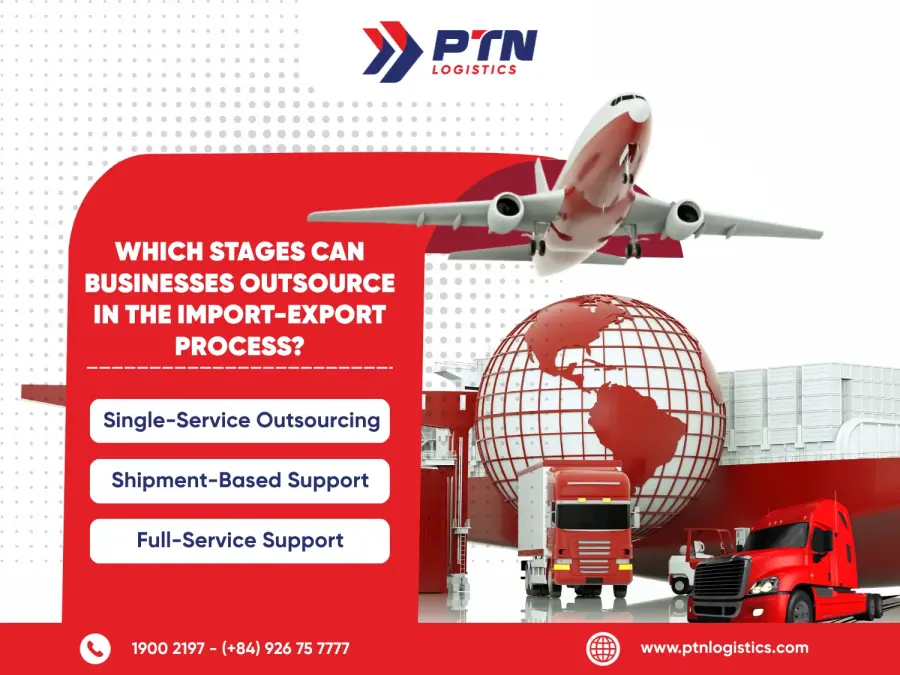
Depending on their resources, businesses can proactively choose which stages to outsource instead of handing over the entire process. Common outsourcing arrangements include:
Outsourcing individual operations
This model is suitable when your company already has documentation staff but lacks experience in handling operations directly at ports. Rather than managing every task internally, you can outsource specialized export-import operations such as customs declarations, applications for specialized permits, or domestic transportation of specialized containers. This arrangement helps optimize operating budgets while ensuring compliance with the strict legal requirements applicable to commercial goods, which are considerably more complex than ordinary express deliveries.
Shipment-by-shipment support
This option is suitable for businesses that do not require regular customs clearance services. When importing machinery or raw materials, businesses can use an external service provider instead of maintaining a dedicated team.
Logistics agents will assess the shipment, advise on the required procedures, and handle related operations. They will also prepare the appropriate documents and commercial permits from the outset.
End-to-end process support
This is a comprehensive outsourcing solution, covering everything from contacting overseas suppliers and booking sea or air freight to customs clearance and delivery to the warehouse. Using a full-package export-import service helps SME business owners save resources and focus on their core business activities.
For large commercial shipments in particular, coordination across every stage ensures smooth cargo movement and minimizes unexpected issues during transportation.
Which businesses should use export-import services?
Commercial logistics outsourcing, which is fundamentally different from personal express delivery services, is particularly effective in optimizing costs and reducing risks for the following groups of businesses:
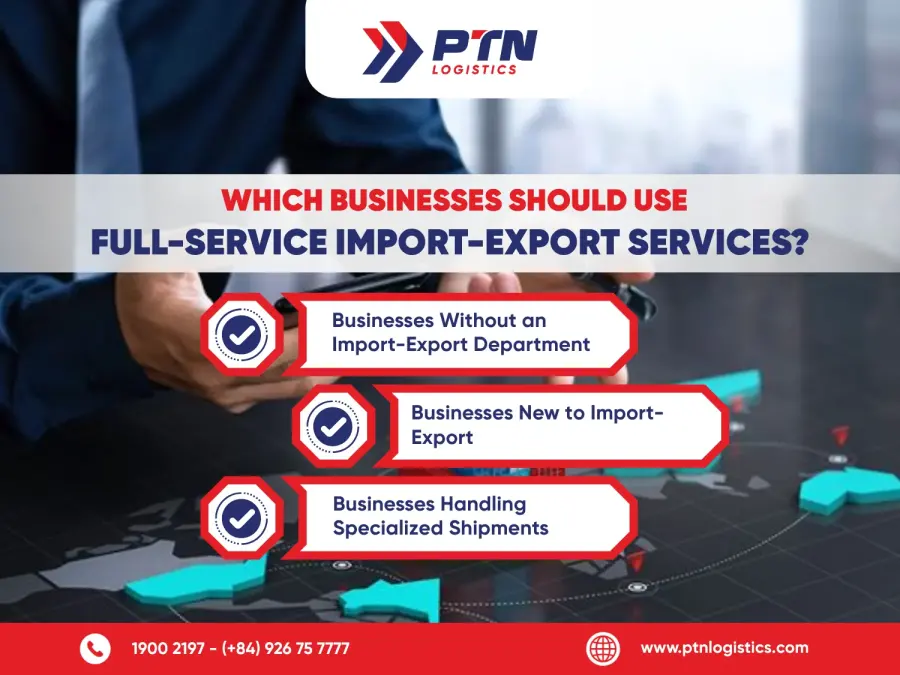
Businesses without an export-import department
Instead of incurring additional fixed costs to maintain dedicated personnel, small and medium-sized companies should make use of professional export-import services. The agency acts as an in-house department, professionally handling complex commercial documents that express delivery services do not support. This helps businesses reduce payroll expenses and optimize operating budgets while ensuring continuous cargo movement and strict compliance with customs regulations.
Businesses that are new to export-import operations
When entering international trade for the first time, the greatest risks for businesses often involve applying incorrect tax rates or failing to prepare complete documentation. Unlike ordinary parcel shipments, international trade requires a thorough understanding of strict legal requirements. Therefore, using a comprehensive export-import service helps businesses avoid administrative penalties and costly port storage charges.
With support from a specialized service provider, businesses can focus on developing their operations instead of spending considerable time dealing with procedures and issues at border gates.
Businesses handling specialized shipments
For goods such as chemicals, medical equipment, and frozen food, businesses may need to complete additional specialized inspections and meet specific storage requirements. An export-import service provider can assist with permit applications, document preparation, and the coordination of suitable transportation, ensuring that shipments are handled in accordance with regulations and properly maintained throughout the transportation process.
Should businesses handle export-import operations in-house or outsource them?
The differences between handling operations internally and outsourcing them are illustrated in the comparison table below:
| Comparison criteria | In-house operations | Outsourcing export-import services |
| Suitable business model | Businesses with frequent, continuous export-import activities and large, stable cargo volumes throughout the year. | Businesses with irregular or seasonal shipment volumes, or SMEs without a dedicated department. |
| Staffing requirements | Requires investment in a dedicated team with in-depth knowledge of customs regulations, product policies, and HS code classification. | No need to maintain a permanent team; businesses can directly leverage the practical expertise of logistics agents. |
| Operating costs | Involves substantial fixed expenses for salaries, training, and the ongoing maintenance of a dedicated department. | Optimizes budgets effectively, with costs paid only for each shipment or operation actually required. |
| Risk management & customs clearance | Businesses are responsible for handling complex incidents at ports and may face difficulties when shipments are selected for physical inspection. | Professional agents closely monitor progress and promptly handle specialized inspections and customs-related issues on the business’s behalf. |
Unsure whether to handle operations in-house or outsource them? Message us on Zalo now for advice on a cost-effective export-import solution!
Coordination process between businesses and service providers
To ensure that international commercial shipments proceed smoothly, businesses and service providers need to clearly agree on the scope of work and each party’s responsibilities. Transparent coordination helps ensure that documentation, customs clearance, and delivery are completed according to plan.
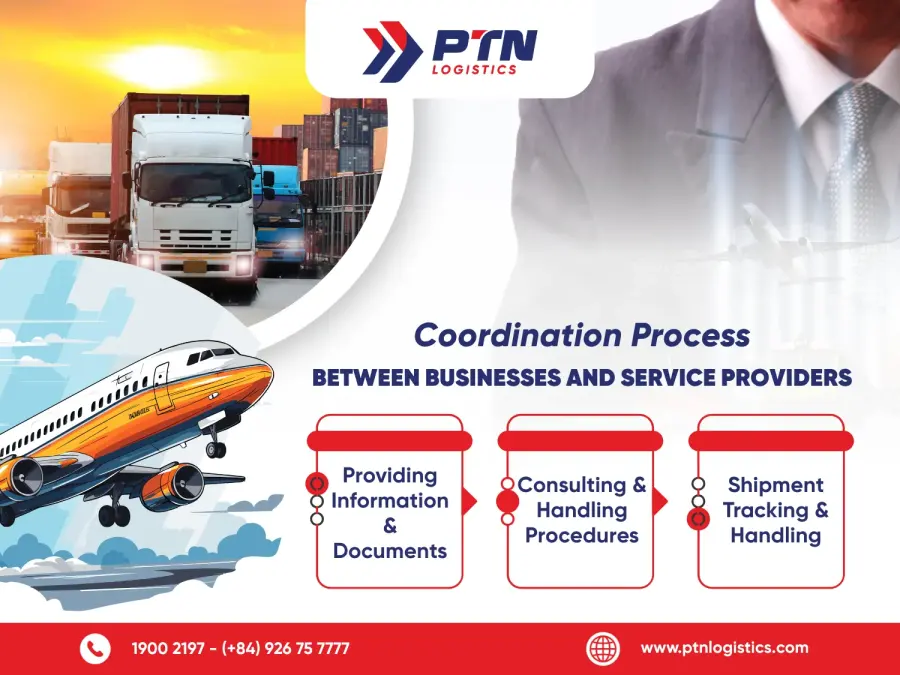
Businesses provide information and documentation
The first and decisive step is for the cargo owner to provide the initial set of commercial documents, such as the Invoice, Packing List, Sales Contract, and detailed cargo information. Unlike domestic transactions or small parcel deliveries, these details must be carefully reviewed so that the export-import service provider can accurately assess applicable product policies, HS codes, and relevant specialized inspection requirements, ensuring legal compliance before customs declarations are submitted.
Service providers advise on the implementation plan
Based on the actual documentation, logistics specialists analyze the shipment and recommend the most suitable solution in terms of routes, transportation methods, and the schedule for completing export-import procedures. This plan allows businesses to estimate all potential costs in advance, select an appropriate border gate, and understand the expected customs clearance time.
Coordinating shipment tracking and issue resolution
Throughout transportation and customs clearance at the port, both parties maintain continuous communication to update the shipment status. The export-import service provider directly handles actual issues such as physical inspections and explanations to customs authorities, while also providing businesses with detailed progress reports.
What responsibilities must businesses still fulfill when outsourcing?
When using outsourced services, businesses must still fulfill the following core responsibilities to ensure legal compliance and maintain shipment schedules:
- Providing original documents and legal information: The cargo owner is responsible for the accuracy of commercial contracts, invoices, technical specifications, and information about the origin of goods. Complete and accurate information helps minimize the risks of incorrect HS codes, inconsistent documentation, or violations of customs regulations.
- Coordinating financial matters and approving additional costs: Businesses must fulfill their tax payment obligations on time and proactively approve handling solutions when shipments encounter actual issues at the port, such as physical inspections or document amendments.
Criteria for choosing an export-import service provider
To evaluate and select a reliable outsourcing partner, businesses should consider the following key professional criteria:
- Operational expertise and practical experience: An export-import service provider must have in-depth knowledge of customs regulations and product policies, as well as extensive experience handling customs clearance at major border gates and seaports, enabling it to quickly resolve legal bottlenecks.
- Transparency and contractual commitments: Businesses should carefully review clear fee schedules, transparent shipment tracking systems, and specific contractual provisions regarding compensation for losses.
- Quality of the support team: A dedicated, highly qualified consulting team that is always ready to respond and provide 24/7 support helps businesses feel confident throughout the trading process.
Resolving documentation and customs clearance challenges through a comprehensive service becomes much easier with the support of a specialized provider. Send your shipment information to PTN Logistics now to receive timely assistance. Experience safe, fast, and cost-effective export-import services!
Looking for a reliable export-import partner? Connect with PTN’s team of specialists directly via Zalo.
Contact Information
- Hotline: 1900 2197 – 0926 75 7777
- Email: nam.nguyen@ptnlogistics.com