


Need to ship goods internationally quickly, on schedule, and with minimal risk of delivery delays? Air freight is a suitable option for shipments where time is a priority. To choose the optimal solution, businesses need to consider the type of goods, weight, flight schedules, customs procedures, and actual costs. Join PTN Logistics to learn about international air freight transportation and the essential information to know before shipping goods.
What types of goods are suitable for air freight?
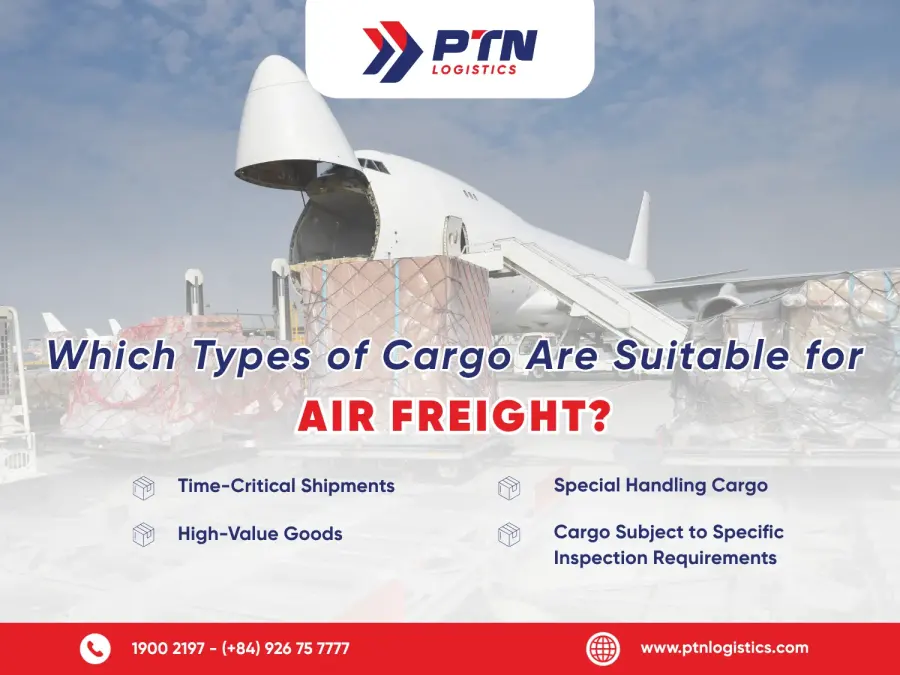
Air cargo transportation is suitable for shipments that require fast delivery, high-value goods, or goods requiring specialized handling.
Goods requiring short delivery times
Unlike express delivery services, which typically focus on small parcels delivered directly to the recipient, Air Freight is suitable for larger shipments and helps optimize transit time between airports.
Air freight is suitable for shipments with urgent delivery deadlines, such as:
- Replacement components
- Urgent spare parts
- Product samples
- Goods that need to be replenished in time to fulfill orders, etc.
High-value goods
High-value goods are often considered for air transportation due to its strict control procedures and short transit times. This helps minimize risks during transportation.
Businesses need to pay attention to packaging specifications, value declarations, security requirements, and insurance conditions appropriate for each shipment.
Goods requiring special transportation conditions
Some shipments require controlled conditions throughout the transportation process, typically including pharmaceuticals, perishable goods, live animals, or temperature-sensitive products. These are special categories of goods that may involve specific requirements regarding packaging, labeling, documentation, temperature, and handling procedures.
When transporting goods internationally by air, businesses should clearly identify storage conditions, handling time at transit points, and the capabilities of the flight route before making a booking.
Types of goods that require condition checks before transportation
Certain types of goods, such as lithium batteries, chemicals, flammable substances, or magnetic materials, need to be checked before being accepted by the airline.
Depending on the specific circumstances, shipments may need to meet classification, packaging, labeling, and documentation requirements under IATA DGR, while also complying with the specific regulations of the airline and destination country.
When should businesses choose air freight?
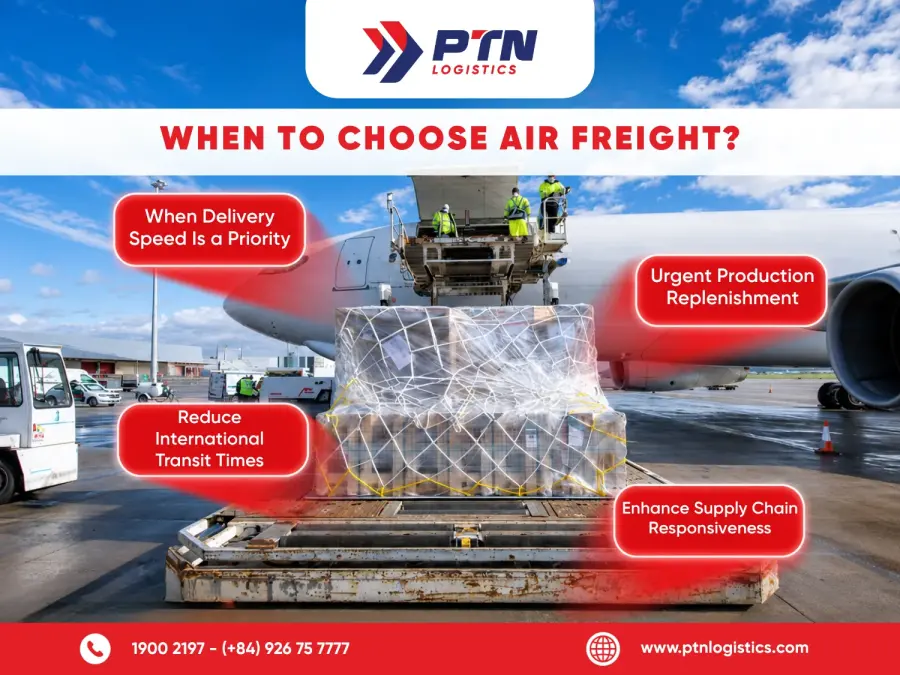
This transportation method helps accelerate the supply chain. The decision to choose air freight should be based on delivery deadlines, production schedules, and actual transit times.
When delivery schedules are a priority
Air transportation is suitable for shipments that require shorter transit times and must meet strict delivery schedules.
Businesses still need to consider flight schedules, cut-off times, airport handling times, and customs procedures at both ends to determine the actual delivery and receipt time.
When production or business plans need to be met
Air Freight is an optimal choice when businesses need to transport raw materials, components, or spare parts in time to meet production schedules, minimize production line disruptions, or prevent shortages of goods for business operations.
When urgent replenishment is required or supply sources change, air freight helps shorten transportation time.
When international transportation time needs to be reduced
When transportation distances are long but delivery and receipt times need to be shortened, international air freight is a solution worth considering.
Businesses should not rely solely on flight time when planning shipments. Instead, they need to calculate the entire process, from cargo collection, airport handling, flights, transit, and customs clearance to final delivery at the destination.
PTN Logistics accompanies businesses throughout the transportation process and handles import and export procedures. Simply provide the necessary information, and PTN will advise on a solution that suits your actual needs.
How does the international air freight process work?
The transportation process consists of multiple consecutive stages, from shipment inspection and booking to cargo delivery at the airport and handling at the destination.
Checking Shipment Information and Conditions
Before making a booking, businesses need to provide detailed information about the shipment’s dimensions, weight, and route.
Based on this information, the logistics provider will review cargo capacity, documentation, and packaging specifications to ensure that the goods meet airport acceptance requirements and avoid the risk of being rejected.
Booking and Cargo Preparation
After the transportation solution is confirmed, the freight forwarder proceeds with booking space with the airline according to a suitable flight schedule.
For shipments requiring special handling, packaging and labels must meet the corresponding requirements before the goods are delivered to the air cargo terminal. Information on the documents, packages, and air waybill must be consistent to avoid adjustments.
Completing Procedures and Delivering Goods at the Airport
Goods are transported to the air cargo terminal within the designated acceptance period for weighing, measuring, package condition inspections, and document verification.
After that, the shipment undergoes export customs clearance procedures and is handed over to the airline or ground handling service provider in preparation for loading onto the flight.
Transportation and Cargo Handling at the Destination
After being loaded onto the aircraft, the shipment may be transported on a direct flight or through a transit point, depending on the route.
At the destination airport, the goods are unloaded and transferred to the warehouse, where documents are processed and import customs clearance procedures are completed before delivery to the recipient. This stage also includes receiving incoming cargo, transferring it to the freight forwarder, and arranging final-mile delivery.
What actors affect air freight transit time?
Air freight transit time does not depend solely on flight duration but is also affected by various stages before and after the flight. Businesses should pay attention to the following key factors:
- Flight routes and operating schedules: Direct flights are generally faster than routes requiring transit. Flight frequency, space availability, and connecting flight schedules also affect the total transportation time.
- Airport handling time: Goods need to be weighed, measured, have their documents checked, undergo security screening, and complete handling procedures before being loaded onto the aircraft. If the cargo misses the cut-off time, the shipment may have to be transferred to the next flight.
- Customs procedures: Clearance time depends on the documentation, commodity policies, and inspection requirements at both the origin and destination.
- Cargo characteristics: Dangerous goods, lithium batteries, temperature-controlled goods, or special cargo often require additional inspection and handling time.
- Transit and final-mile delivery: For connecting routes, waiting time at intermediate airports and delivery time after customs clearance must also be included in the transportation schedule.
How are air freight costs calculated?
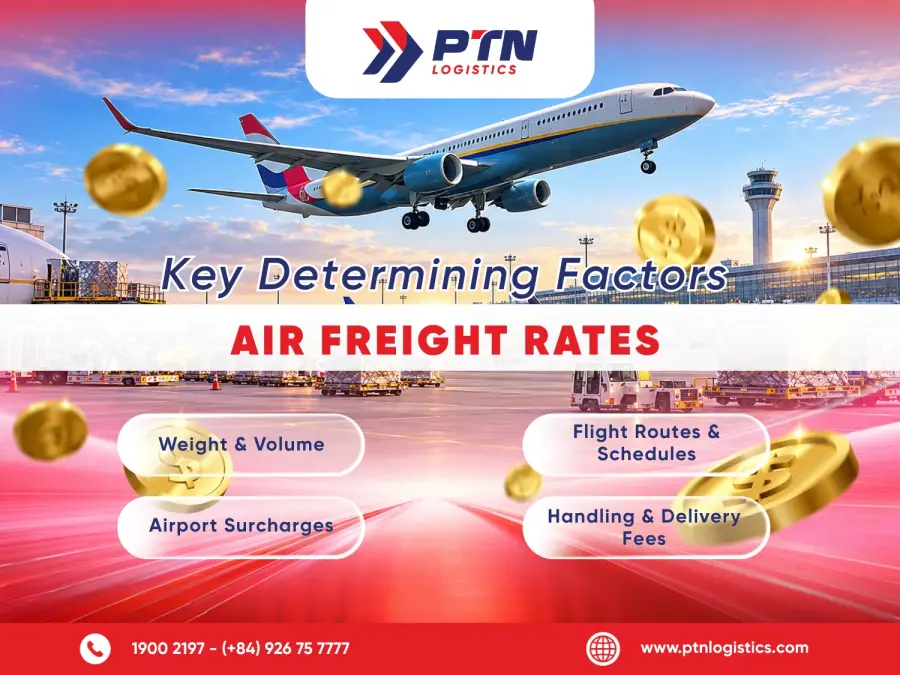
Costs also depend on the shipment’s weight, package volume, flight route, operating schedule, and additional services incurred during transportation.
Actual weight and volumetric weight
Air freight charges are generally calculated based on the Chargeable Weight, which is the greater of the actual weight and the volumetric weight (Length × Width × Height (cm) / 6,000).
If there are multiple packages, volumetric weight is calculated based on the total volume of all packages.
Therefore, even lightweight but bulky goods may have a high chargeable weight. Businesses should provide accurate information about the number of packages, dimensions, and weight to receive a quotation that closely reflects actual costs.
Flight routes and schedules
Freight rates vary depending on the origin, destination, flight schedule, available cargo capacity, and whether the shipment is transported by direct flight or through transit.
Rates may also fluctuate depending on the timing and the airline’s cargo capacity. Therefore, businesses should consider prices, schedules, and transportation times together rather than comparing only the rate per kilogram.
Fees related to the shipment
In addition to the main transportation charges, businesses should be aware of several fees that may arise depending on the route and service scope:
- Cargo collection fee: The cost of collecting goods from the sender’s address and transporting them to the warehouse or airport.
- Airport handling fee: Includes cargo acceptance, weighing and measuring, handling, and processing at the warehouse.
- Security screening fee: Applies to security inspections conducted before goods are loaded onto the aircraft.
- Documentation fee: Costs related to the air waybill and transportation document processing.
- Customs clearance fee: Incurred when businesses use customs declaration services at the origin or destination.
- Warehousing fee: May arise if goods remain in the warehouse beyond the specified free storage period.
- Delivery fee: The cost of transporting goods from the airport or warehouse to the recipient’s address.
Depending on the shipment, transportation route, and service conditions, quotations may include other additional charges.
What should businesses prepare to obtain an air freight quotation?
To receive a quotation that accurately reflects the actual shipment, businesses should provide all the following information from the outset:
- Cargo information: Product name, number of packages, type of packaging, actual weight, and dimensions (length × width × height) of each package. This information serves as the basis for determining the chargeable weight and checking the airline’s acceptance conditions.
- Origin – destination: Provide the cargo collection address, origin airport, destination airport, or delivery address to determine the transportation route and related costs.
- Required timeline: Businesses need to specify the date when the goods will be ready and the desired delivery deadline to check flight schedules, space availability, and suitable transportation solutions.
- Service scope: Determine whether the required service is airport-to-airport transportation or door-to-door collection and delivery. Businesses should also indicate whether they require customs declarations, insurance, or destination services.
- Special cargo information: For lithium batteries, chemicals, dangerous goods, or goods subject to specific transportation conditions, businesses need to provide additional technical information and relevant documentation for inspection before booking.
PTN Logistics supports businesses in reviewing shipments, checking flight routes, and developing suitable transportation solutions. Send your shipment information so that PTN can work with you to consider suitable transportation options and costs before implementation.
Each shipment has different characteristics and requirements. Therefore, businesses need to carefully evaluate their shipments before choosing air freight. Checking flight routes, acceptance conditions, documentation, and costs helps minimize unexpected expenses. PTN Logistics supports businesses in reviewing shipment information and developing solutions tailored to each shipment. Contact PTN for consultation and a quotation based on your needs.
Contact information
- Hotline: 1900 2197 – 0926 75 7777
- Email: nam.nguyen@ptnlogistics.com