

From domestic deliveries to cross-border routes, road freight meets a wide range of cargo transportation needs thanks to its flexibility and ability to provide direct connections. Choosing the right vehicle, transportation method, and route helps businesses control costs, delivery times, and unexpected expenses. PTN Logistics shares common transportation solutions and key factors to consider throughout the shipping process.
Which transportation routes are suitable for road freight?
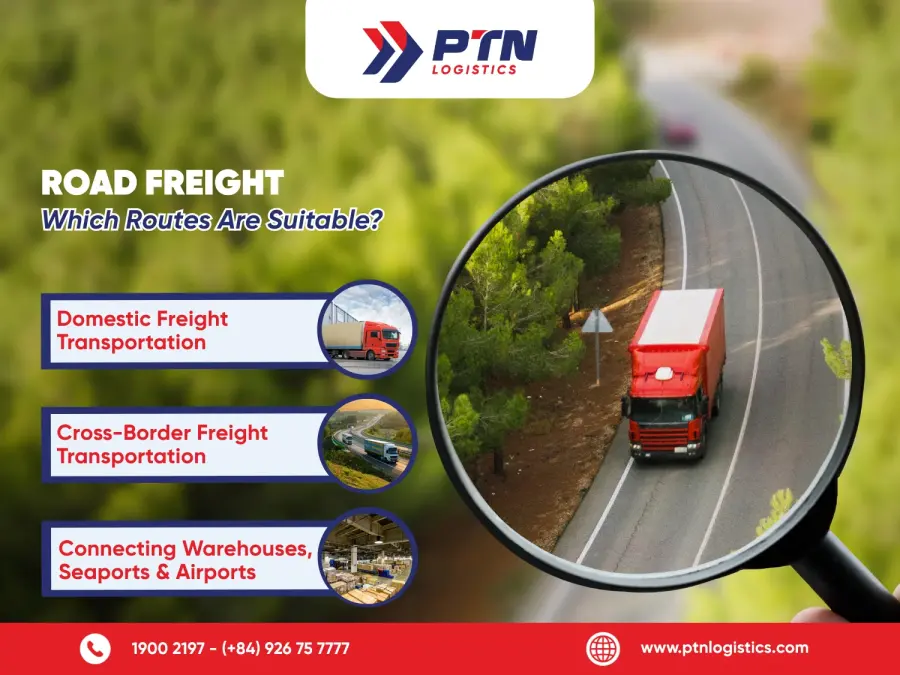
Depending on the origin, destination, and delivery requirements, businesses can choose suitable road freight routes to gain greater control over transportation time and costs.
Domestic cargo transportation
Within the national logistics network, road freight offers maximum flexibility thanks to its ability to provide door-to-door delivery directly to factories or distribution warehouses. From major industrial parks to retail networks, domestic road freight allows businesses to take control of their schedules.
By effectively accommodating both less-than-truckload (LTL) shipments and full truckload (FTL) transportation, this solution helps optimize storage costs and ensures that supply chains operate smoothly and continuously in actual business operations.
Cross-border cargo transportation
For international trade with neighboring countries, cross-border road freight is a balanced solution in terms of cost and speed. Thanks to trade agreements and increasingly streamlined customs procedures at border gates, goods can be transported directly from their loading point in Vietnam to the destination country without transshipment.
This process not only shortens transit time but also minimizes the risk of damage, ensuring the highest possible level of safety for shipments.
Connecting warehouses, seaports, and airports
As an important link in multimodal transportation, road freight effectively handles First-Mile and Last-Mile operations. All import-export shipments, whether transported by sea or air, require road freight to move goods from factories to seaports or from airport warehouses to distribution centers.
This close connectivity helps prevent supply chain disruptions and speeds up cargo clearance from storage areas, thereby improving logistics operational efficiency and creating a competitive advantage.
Chat with us via Zalo OA to arrange a route assessment.
What types of goods are suitable for road freight?
Depending on their physical and chemical characteristics and storage requirements, different categories of goods achieve greater economic efficiency when transported using appropriate methods.
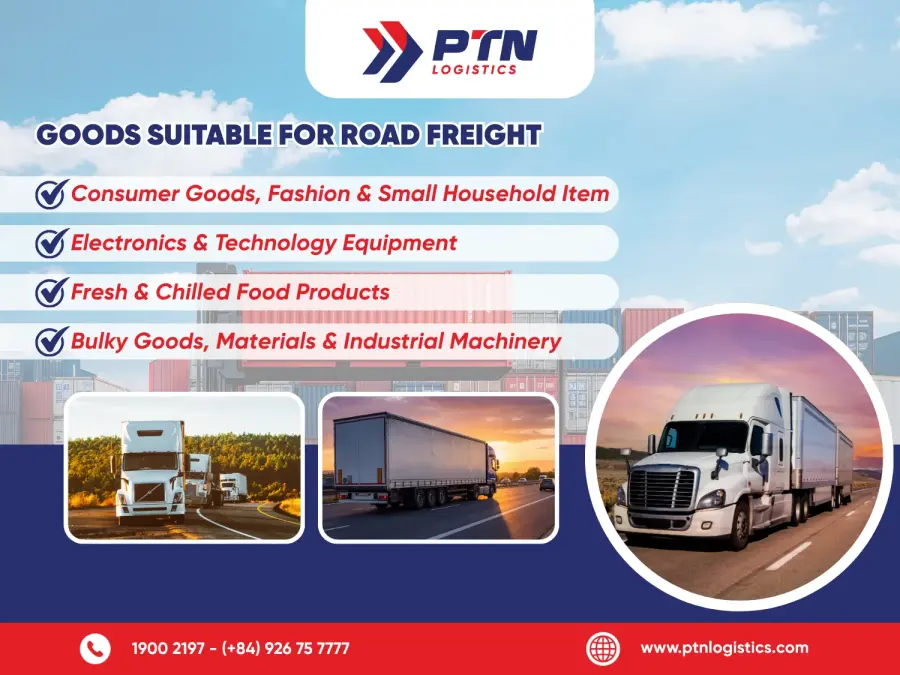
Consumer goods, fashion products, and small household appliances
With their short product life cycles, continuous inventory turnover, and extensive distribution networks serving retail systems, consumer goods, fashion products, and small household appliances are highly suitable for road freight. This method effectively meets requirements for cargo consolidation, less-than-truckload (LTL) shipments, and flexible deliveries to individual retail locations.
Electronics and technology equipment
Electronic products, high-tech equipment, and components require extremely strict safety standards throughout transportation to prevent impacts or vibrations that could affect their microcircuits. Therefore, transporting these goods by road using enclosed, moisture-resistant, and shock-resistant trucks is an optimal protective solution.
Fresh food and refrigerated goods
For agricultural products, fresh food, pharmaceuticals, and frozen goods that require a strict cold chain (Cold Chain), using road freight with specialized refrigerated trucks is essential. The vehicle’s automatic temperature control system helps maintain the required temperature range throughout long journeys, preventing spoilage or deterioration.
Bulky goods, materials, and industrial machinery
Machinery, construction materials, and oversized or overweight cargo often require suitable vehicles and transportation methods. Road freight can meet these needs with low-bed trailers, specialized vehicles, and lifting equipment, ensuring that goods are properly secured and safely transported over long distances.
How are road freight charges calculated?
To accurately estimate their budgets, businesses need to understand the cost components that determine actual transportation rates under each logistics contract.
Distance and transportation routes
The fundamental factors determining road freight charges are the actual travel distance and the geographical characteristics of the transportation route. Flat routes along major transport corridors and expressways connecting key economic regions generally offer more stable and cost-effective freight rates.
In contrast, deliveries to remote areas, rugged terrain, or locations with limited transport infrastructure may incur additional charges for vehicle wear and tear, fuel consumption, tolls, and parking or terminal fees throughout the journey.
Vehicle type
Choosing the right vehicle not only ensures cargo safety but also directly affects total logistics costs. Freight rates can vary significantly depending on whether businesses hire standard tarpaulin-covered trucks, enclosed trucks, or specialized refrigerated trucks that require ongoing temperature-control expenses.
In addition, full truckload (FTL) transportation generally involves a higher one-time cost than less-than-truckload (LTL) shipping. However, it offers significant advantages in delivery speed and minimizes the risk of damage caused by transshipment.
Cargo weight and dimensions
Transportation costs depend closely on the conversion and management of the following two measurements:
- Gross weight: Applied to heavy, dense goods (such as steel) for freight calculation based on actual weight.
- Volume weight: Applied to bulky, lightweight goods that occupy considerable truck space, ensuring fair charges for the transportation provider.
Accurately declaring these measurements helps businesses optimize vehicle capacity and avoid overloading penalties.
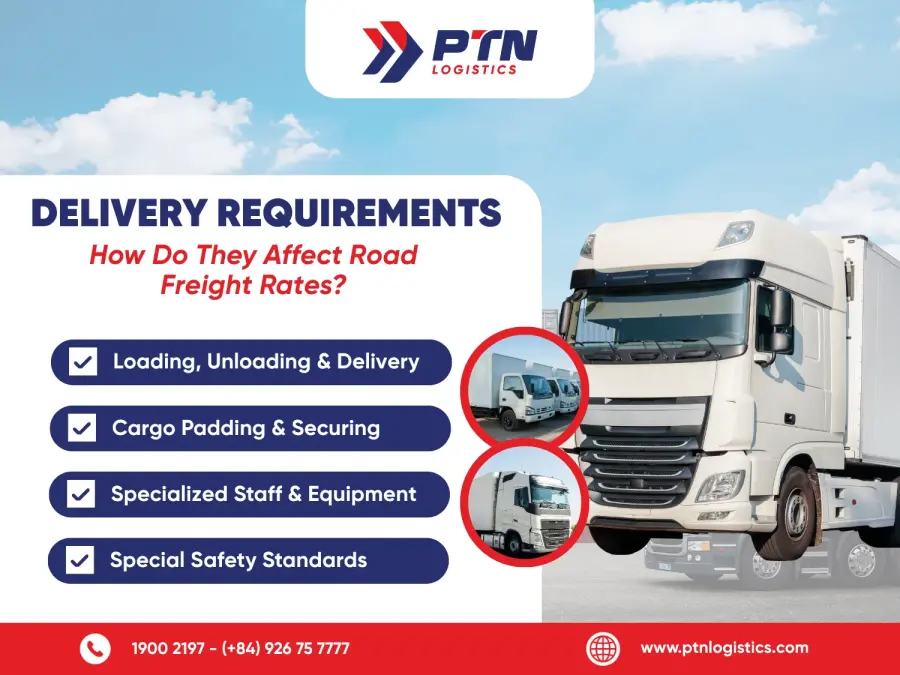
Special delivery and handling requirements
In addition to the base freight rate, road freight quotations are directly affected by value-added services and specialized requirements from cargo owners:
- Loading, unloading, and delivery services: Includes manual loading and unloading at designated locations or flexible deliveries during urban truck-restricted hours.
- Special cargo handling: Includes specialized padding and securing operations for fragile goods or dangerous goods (DG).
- Resource requirements: Requires the logistics service provider to arrange additional personnel and specialized equipment.
- Safety standards: Requires strict compliance with demanding safety standards, leading to an increase in overall operating costs.
Which transportation vehicles should businesses choose?
Considering cargo volume and characteristics when selecting the right type of vehicle helps businesses optimize operating costs.
Trucks
This is a flexible and widely used solution within the road freight ecosystem, meeting domestic cargo distribution needs with various load capacities. From light-duty trucks for urban deliveries to heavy-duty trucks operating on interprovincial routes, these vehicles provide flexible delivery solutions to individual warehouses. Choosing the right truck helps businesses significantly reduce fuel costs and ensure that cargo transportation remains on schedule.
Container trucks
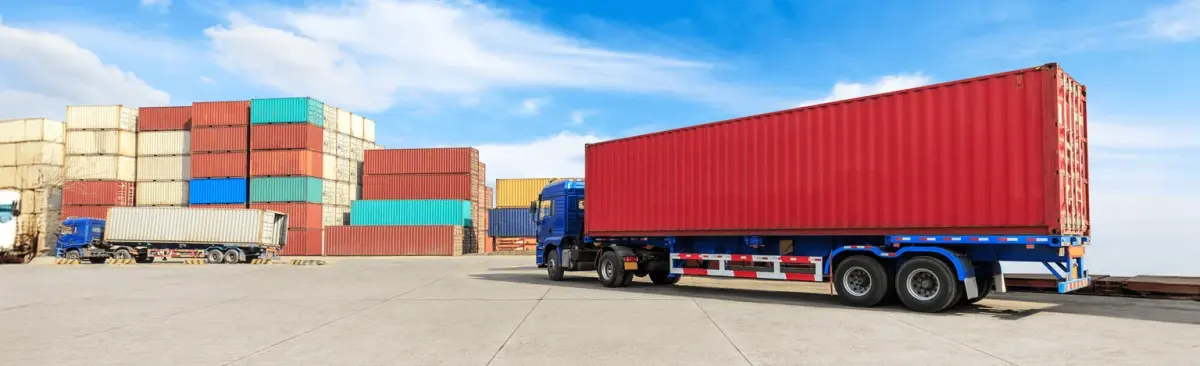
For large shipments, full-container-load (FCL) import-export cargo, or goods transported over long-distance cross-border routes, container trucks are an optimal choice. Standardized trailer systems protect goods from external impacts throughout long journeys. This option offers economies of scale, helping large manufacturing and trading businesses optimize transportation costs per unit of cargo.
Specialized vehicles
When dealing with complex logistics requirements, specialized vehicles play an indispensable role in road freight. These include truck-mounted cranes, chemical tankers, vehicles for oversized and overweight cargo, and refrigerated trucks that maintain strict temperatures for agricultural and seafood products. Using the appropriate specialized vehicles ensures compliance with stringent technical and safety standards, helping businesses preserve product quality throughout the journey.
Need to choose between a truck, container truck, or specialized vehicle? Message PTN via Zalo OA for advice on the most suitable solution.
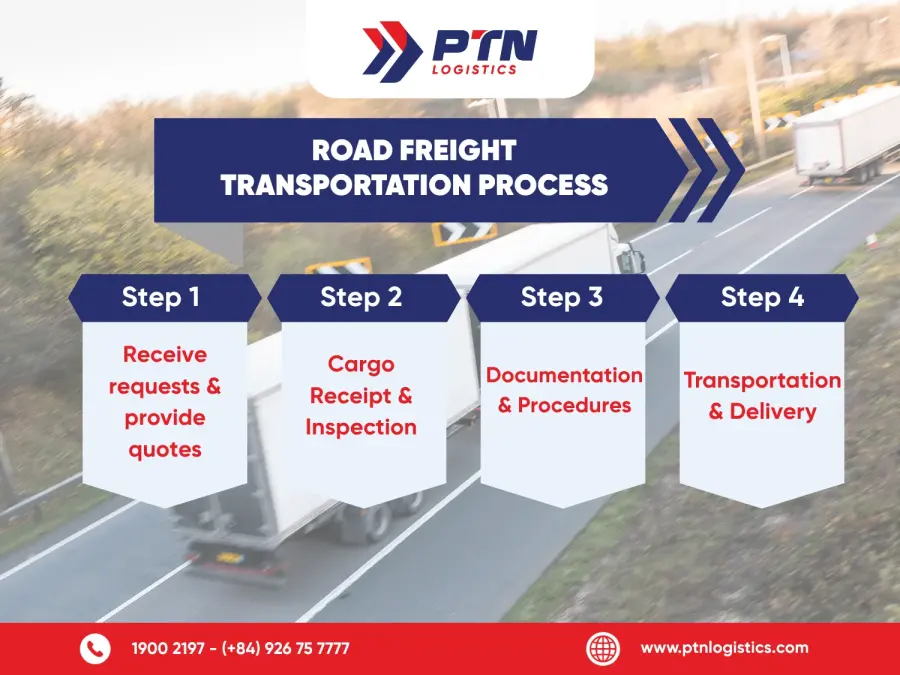
What is the process for transporting goods by road?
A standardized and transparent operating process helps businesses manage their schedules, control delivery progress, and minimize unexpected issues during transportation.
Step 1: Receiving requests and quoting road freight services
The transportation provider receives shipment information, including weight, dimensions, origin, and destination. Based on these details, the provider selects a suitable transportation solution and sends a detailed quotation.
Step 2: Cargo collection
After the transportation plan has been agreed upon, the logistics provider coordinates vehicles and personnel to collect the goods according to the agreed schedule. Both parties check and verify the quantity, packaging condition, and documents before loading the cargo onto the vehicle.
Step 3: Handling procedures and preparing documents
The transportation provider prepares the necessary documents for the transportation process, such as the transportation contract, invoices, warehouse release notes combined with internal transportation documents, or customs declarations for goods requiring customs procedures.
Step 4: Transporting goods to the recipient’s address
Goods are transported along the agreed route and monitored throughout the journey. Upon arrival, the driver coordinates with the recipient to check the condition and quantity of the goods before completing the delivery.
What factors affect delivery time?
Transportation time depends on several factors. Understanding these factors helps businesses take a more proactive approach to inventory planning and cargo distribution.
Geographical distance and transportation routes
Transportation time depends on several factors. Understanding these factors helps businesses take a more proactive approach to inventory planning and cargo distribution.
Geographical distance and transportation routes
The two factors that directly affect transportation time include:
- Distance: The longer the distance between the origin and destination, the longer the transportation time.
- Route: Expressways and convenient routes help shorten transportation time, while detours, steep mountain passes, or limited infrastructure may extend the journey.
Therefore, selecting and calculating an appropriate route before the vehicle departs is extremely important.
Cargo type and handling procedures
The physical and chemical characteristics of goods affect the actual delivery speed of the entire journey. For standard shipments, loading and unloading can be completed quickly.
Meanwhile, specialized goods such as oversized cargo, temperature-controlled shipments, or goods requiring multiple complex inspection procedures need additional handling time at transshipment points. This requires smooth coordination between all parties to minimize delays.
Traffic conditions and infrastructure
High traffic volumes during rush hours in major cities or congestion at traffic bottlenecks are common causes of delivery delays. In road freight operations, drivers must strictly comply with city truck-restricted hours.
Restrictions on travel times through central areas require logistics providers to develop flexible schedules and avoid infrastructure bottlenecks as much as possible to ensure on-time delivery.
Weather and external conditions
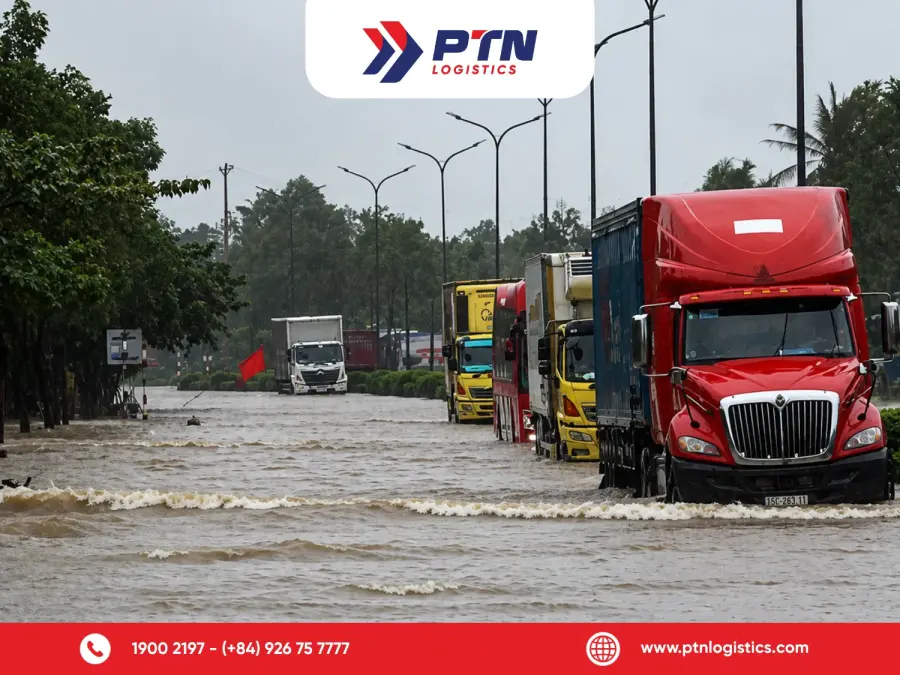
Adverse weather conditions such as heavy storms, landslides on mountainous routes, or urban flooding are major challenges to operational schedules. These external conditions may force drivers to reduce speed or temporarily stop to ensure the safety of people and vehicles.
When providing road freight services, professional providers must continuously monitor weather forecasts to promptly develop solutions for unexpected situations.
Need to develop a road transportation plan for your business? Contact PTN Logistics for assistance.
What information should businesses provide to receive a quotation?
To receive a fast and accurate quotation from logistics providers, businesses should prepare the following essential technical information in full and transparently.
Cargo information
The name of the goods, total gross weight, dimensions (length, width, and height) or actual volume, together with any specific technical requirements for fragile goods, refrigerated cargo, or oversized and overweight shipments.
Delivery route information
The exact addresses of the origin and destination, along with information about transport infrastructure, such as weight restrictions, accessibility for large vehicles, and truck-restricted hours in the relevant areas.
Vehicle and additional service requirements
The type of vehicle required (tarpaulin-covered truck, enclosed truck, or container truck), transportation arrangement (full truckload FTL or less-than-truckload LTL), and any requirements for on-site loading and unloading, crane lifting, protective padding materials, and documentation procedures.
Schedule and implementation timeline
The expected loading time, whether deliveries will be made in multiple batches or as urgent shipments, and the deadline for completing delivery at the destination so that the transportation provider can allocate vehicle resources efficiently.
Submit a request to receive a quotation for road freight services suited to your route and delivery requirements.
Road freight is a solution that gives businesses the flexibility to connect transportation routes, select the right vehicles, and effectively control freight costs. Understanding the process and the factors affecting delivery time helps ensure smooth supply chain operations. Contact PTN Logistics today for professional advice and a detailed quotation tailored to your business!
Contact information
- Hotline: 1900 2197 – 0926 75 7777
- Email: nam.nguyen@ptnlogistics.com