

For large shipments that need to be transported between multiple countries, international sea freight is a popular choice thanks to its reasonable costs and ability to transport various types of goods. Depending on their needs, businesses can choose FCL or LCL to suit each shipment. This article helps businesses understand transportation methods, cost components, and important considerations in the delivery and receipt process.
What types of goods are suitable for sea freight?
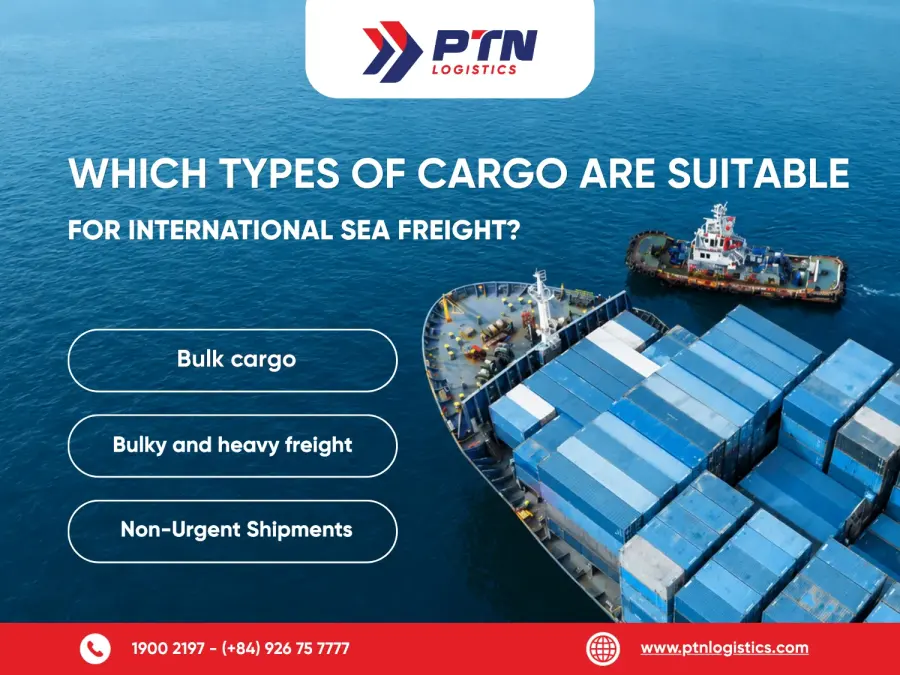
To optimize costs and time, business owners and import-export personnel need to compare the characteristics of their shipments with the transportation method. Below are three categories of goods suitable for this transportation route.
Goods with large quantities
Choosing maritime transportation is the most cost-effective solution for export-import shipments requiring full container loads (FCL) or large-scale less-than-container loads (LCL).
Thanks to the enormous transportation capacity of mother vessels, this option helps businesses reduce logistics costs per unit of product. It is particularly suitable for consumer goods, agricultural products, and materials that need to be exported in large quantities to maintain an effective global supply chain and increase profitability.
Bulky or heavy goods
For industrial machinery, out-of-gauge (OOG) equipment, or raw materials, storage space can be a difficult challenge. At this point, sea freight demonstrates its superiority through specialized container systems such as Open Top and Flat Rack containers.
Its high load-bearing capacity helps address overloading risks and ensures safety. This enables businesses to confidently resolve cost-related challenges and effectively control their budgets without worrying about unexpected surcharges.
Goods that do not require urgent delivery
Long transit schedules are a characteristic of maritime trade, making this method ideal for goods with long shelf lives and carefully planned inventory schedules. Instead of paying expensive air freight charges for urgent transportation, purchasing departments can optimize cash flow by making bookings in advance. When delivery timelines are flexible and preparations are well organized, the budget savings offered by sea freight are undeniable for every business in the supply chain.
Should businesses choose FCL or LCL?
Comparing costs and schedules is always a major concern for export-import businesses. Understanding the fundamental differences between FCL and LCL will help you confidently develop the most optimal transportation plan.
When should you choose a full container load?
Businesses should prioritize FCL (Full Container Load) for sea freight when their shipments meet the following criteria:
- Large Cargo Volume: This is an economically optimal solution for large-scale shipments (however, it still depends on the container type and the type of goods being transported).
- Strict Safety Requirements: Renting an entire container helps ensure product integrity and minimizes the risk of damage because the goods do not need to be loaded and unloaded together with third-party shipments.
- Need to Optimize Time: Delivery schedules are significantly shortened by eliminating the processes of consolidating and separating cargo at the CFS yard.
- Ensuring Continuity: This is an ideal solution for maintaining smooth supply chain operations and meeting strict transportation standards.
When should you choose less-than-container load?
LCL (Less than Container Load) is an appropriate transportation strategy that helps businesses optimize their resources in the following situations:
- Small Cargo Volume: This is the optimal choice for shipments with modest volumes, usually below 15 CBM.
- Need for Strict Budget Control: The purchasing department only needs to pay freight charges based on the actual volume or weight of the goods, eliminating waste caused by unused space in containers.
- Prioritizing Cash Flow Flexibility: The outstanding price advantage of sea freight through LCL enables small and medium-sized businesses to manage their capital more easily and minimize financial burdens.
- No Urgent Delivery Requirements: Businesses can be flexible with delivery timelines and accept slightly longer storage periods to accommodate the cargo consolidation process.
Factors to consider before making a choice
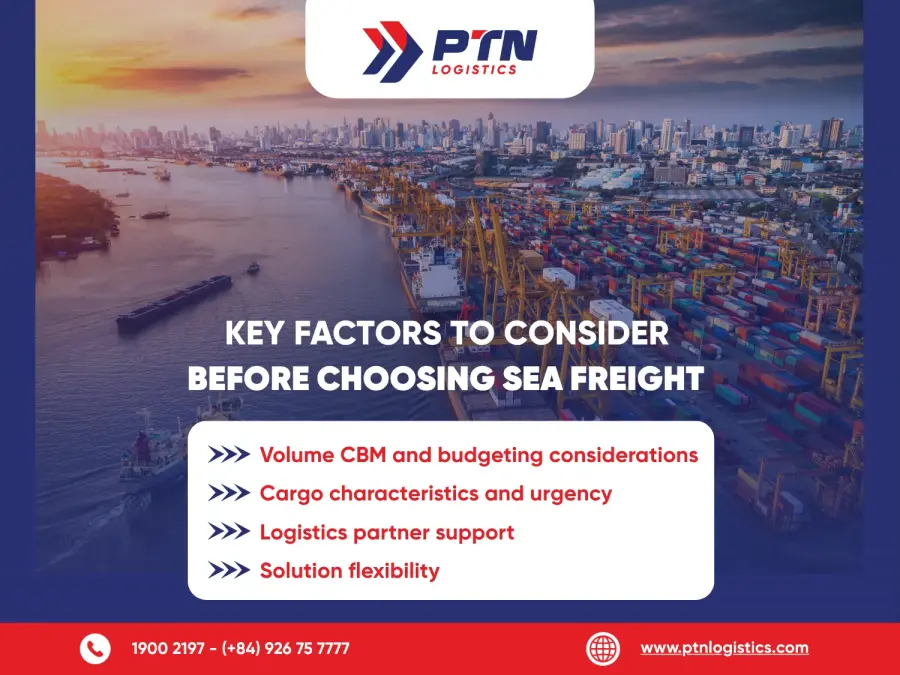
To make accurate and effective decisions, businesses need to carefully analyze the following key variables:
- Volume (CBM) and Budget Considerations: For small shipments, LCL consolidation is a safe strategy that helps businesses protect their profit margins as much as possible.
- Cargo Characteristics and Urgency: If a shipment is high-value and requires urgent delivery, FCL must be the top priority.
- The Role of Logistics Partners: Choosing an experienced provider such as PTN Logistics helps businesses understand all cost components, track shipment schedules, and proactively handle any arising issues.
- Solution Flexibility: Through flexible sea freight options, PTN can accommodate different transportation needs, helping businesses proactively manage costs, limit unexpected additional charges, and reduce the risk of vessel schedule delays.
Not sure whether your shipment should use FCL or LCL to optimize your budget? Send us your shipment details now so PTN can analyze your needs and provide a freight quotation!
How is sea freight transit time calculated?
Understanding how actual transit time is calculated helps businesses proactively plan, reduce concerns about schedule delays, and optimize the cargo transportation process.
Transit time at sea
In sea freight, vessel transit time depends directly on geographical distance and the shipping route being operated. Direct voyages are always much faster than routes that require stops at transshipment ports. Choosing the right shipping line and checking its schedule helps business owners and import-export personnel accurately estimate cargo arrival times, ensuring uninterrupted production.
Cargo handling time at ports
In addition to vessel transit time, the overall schedule also includes operational procedures at both the port of departure and the port of arrival.
- For FCL shipments, containers need time for yard handling (CY) and loading and unloading.
- For LCL shipments, handling at CFS stations requires several additional days for cargo consolidation and separation.
Furthermore, the working speed of customs authorities also has a direct impact. Preparing an accurate set of documents in advance is the key to shortening cargo storage time throughout the sea freight transportation process.
Factors that may change the schedule
In reality, transportation schedules may change due to various factors, such as adverse weather conditions, port congestion, or shipping lines omitting scheduled voyages.
Therefore, closely monitoring shipments and providing timely updates is extremely important. PTN Logistics proactively monitors sea freight schedules, provides clear information about shipment status, and coordinates solutions when issues arise, helping businesses proactively adjust their delivery plans.
What costs are included in sea freight?
Cost transparency is a key factor that helps export-import businesses eliminate concerns about hidden fees, proactively estimate budgets, and develop effective transportation plans.
International freight charges
In sea freight, international freight charges (Ocean Freight – O/F) are the core component and account for the largest proportion of total costs. These charges fluctuate significantly depending on:
- Shipping route
- Container type
- Cargo characteristics
- FCL or LCL transportation method
Shipping lines frequently adjust their rates according to seasonal factors or changes in fuel surcharges. Keeping up with market developments enables purchasing departments to secure bookings at competitive freight rates, effectively protecting their businesses’ profit margins.
Port charges
In addition to O/F, documentation fees and local charges at the ports of departure and arrival also account for a considerable portion of the total costs. The most common charges include Terminal Handling Charges (THC), Bill of Lading (B/L) issuance fees, Delivery Order (D/O) fees, and Seal fees.
In sea freight transportation, these charges are generally fixed according to the shipping line’s standard tariff. PTN’s transparent and detailed disclosure of these charges from the beginning helps customers accurately calculate the cost of goods sold and eliminate concerns about other hidden fees.
Additional costs that need to be budgeted for
To accurately estimate their budgets, businesses cannot overlook the risks of demurrage (DEM), detention (DET), or electricity connection charges for refrigerated cargo. In addition, customs inspection costs or port congestion incidents may significantly increase the total budget.
As a provider with in-depth operational expertise, PTN always advises customers on reasonable Free Time periods in advance and closely monitors the declaration process. We provide a transparent sea freight solution, helping business owners confidently manage financial risks.
Do not let hidden surcharges increase your cost of goods sold. Chat with PTN via Zalo OA now to understand the cost structure clearly!
How does the sea freight transportation process work?
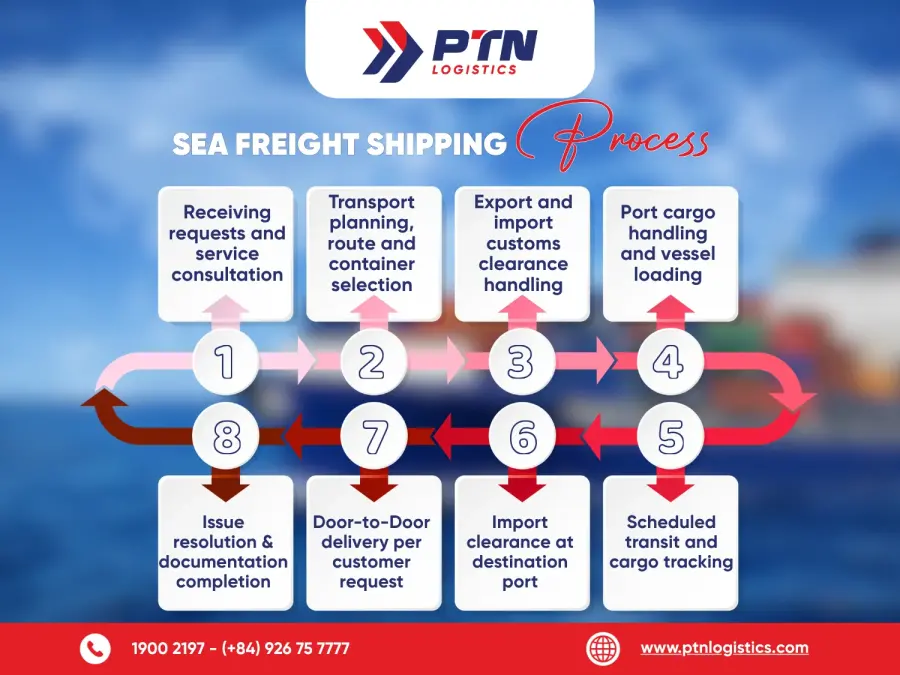
Below are the detailed steps involved in operating sea freight services:
- Step 1: Receiving requests and consulting on suitable services
- Step 2: Developing a detailed transportation plan and selecting shipping routes and containers
- Step 3: Handling export-import customs procedures
- Step 4: Loading and unloading goods at the port and loading them onto the vessel
- Step 5: Transporting goods according to the schedule and tracking shipments online
- Step 6: Handling import procedures at the destination port
- Step 7: Delivering goods directly to the location requested by the customer
- Step 8: Supporting the handling of arising issues and completing post-transportation documentation
Close coordination and transparency at every step are the keys to helping export-import businesses operate smoothly and ensuring international trade schedules are maintained as efficiently and safely as possible.
Need a smooth customs clearance process with a commitment to avoiding missed vessel departures? Contact PTN Logistics now to establish a comprehensive delivery and receipt schedule!
What risks should businesses be aware of when transporting goods by sea?
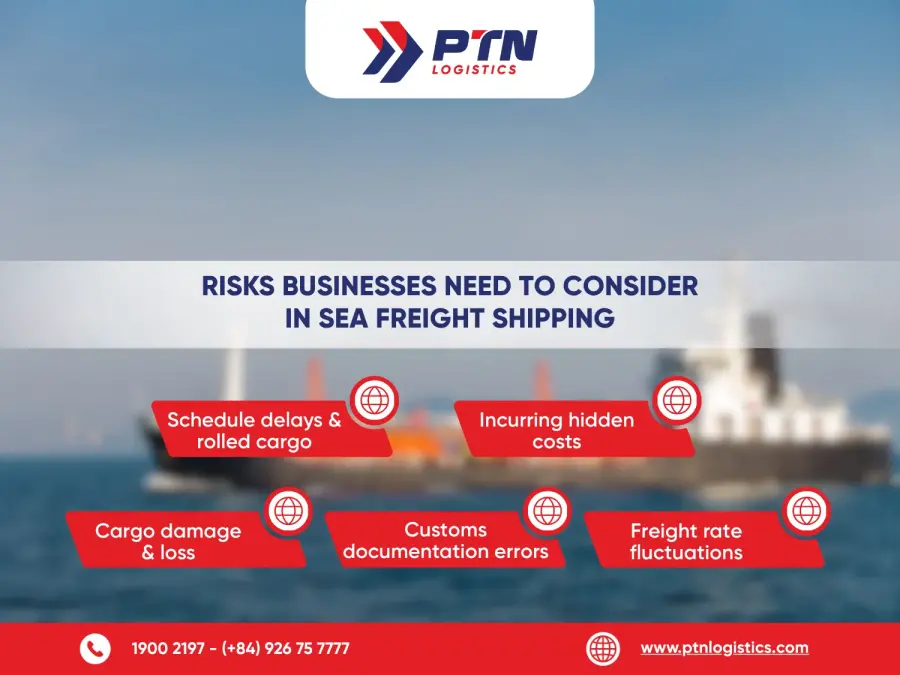
In international trade, proactively identifying risks is an effective way for businesses to protect their profit margins and maintain supply chain continuity. Below are five key risks that business owners and import-export personnel should pay particular attention to.
Schedule delays and missed vessel departures
This is a major concern, often caused by extreme weather conditions, port congestion, or shipping lines canceling scheduled voyages. When goods fail to be loaded onto the vessel on time, the entire subsequent production and distribution plan may be disrupted, resulting in significant losses.
Hidden additional costs
Although Ocean Freight may appear inexpensive, if Free Time is not properly controlled, businesses can easily incur substantial charges such as detention fees (DET), demurrage fees (DEM), or Peak Season Surcharges (PSS) that were not previously announced.
Cargo damage and loss
This risk is particularly high for LCL consolidation due to the process of stuffing and handling cargo together with many other shipments at CFS yards. In addition, strong movements at sea or containers with openings or holes may cause moisture, mold, and product damage.
Errors in customs documentation
A minor discrepancy in the information on the Bill of lading, Commercial Invoice, or C/O can be enough for customs authorities to hold up a shipment. The consequences include prolonged waiting times and rapidly increasing warehouse and storage costs with each passing day.
Fluctuations in freight rates
The sea freight market is highly sensitive to economic and political fluctuations, as well as seasonal factors. Delays in securing bookings may force businesses to purchase freight services at higher rates, disrupting their original cost-of-goods-sold structure.
Proactively identifying risks is a solid foundation for the success of export-import businesses. Instead of worrying about schedule disruptions or surcharges, let PTN Logistics establish a strict control process. We are always ready to resolve challenges and optimize your operational supply chain. Contact PTN Logistics to start working with us today.
Contact information
- Hotline: 1900 2197 – 0926 75 7777
- Email: nam.nguyen@ptnlogistics.com